VIRTUAL ENVIRONMENTS
Distance Perception Case Study
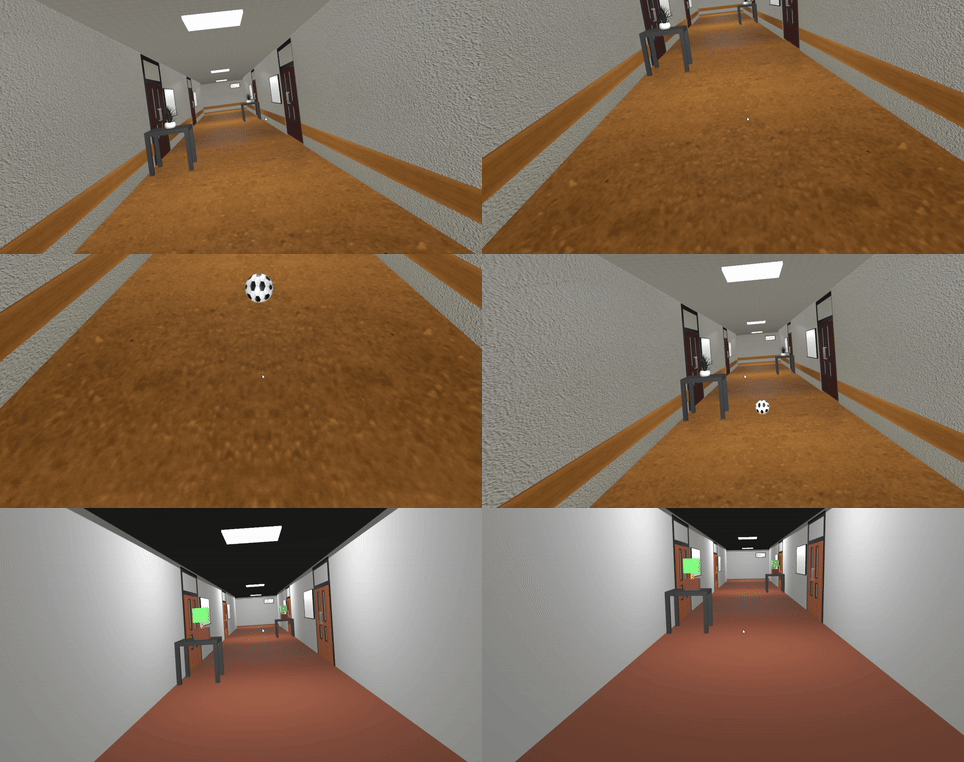
The goal of this case study was to determine whether distance perception in virtual reality is influenced by various visual cues, such as texture quality and environmental detail. My team and I designed three VR environments with varying levels of detail—low, medium, and high. These levels differed in texture resolution, lighting, and the number of objects present in the scene.
During the experiment, participants wore an Oculus Rift headset and were asked to estimate the distance of a ball placed at various positions within the virtual environment. Their estimates were recorded for analysis.
My Contributions
- Environment Creation: I designed all three VR environments in Unity. Each scene varied in visual complexity, with changes in lighting, textures, and object density.
- Data Collection: I collected participant data using an Oculus Rift headset. Participants viewed the VR environments and provided distance estimates, which I recorded manually.
- Data Analysis: I performed statistical analysis using T-tests to compare perceived distances across the different environment detail levels.
You can read the full case study report here.